
Table of Contents
ToggleWoodland Hills is a well-maintained community where homeowners take pride in their properties, but keeping a clean house with California’s dust, pollen, and seasonal debris can feel like a full-time job. Whether you’re juggling work and family or simply running out of steam on weekends, figuring out the right cleaning strategy for your home matters. This guide covers both professional cleaning services available in the Woodland Hills area and practical DIY approaches that can save money and give you control over how your home is maintained. You’ll find honest breakdowns of what works, what takes real time, and when it makes sense to bring in help.
Key Takeaways
- Woodland Hills homeowners benefit from a proactive cleaning strategy that combines professional services (typically $250–$500 per visit) with DIY upkeep to manage dust and seasonal pollen effectively.
- A hybrid approach—handling weekly light cleaning yourself and hiring professionals quarterly or twice yearly—costs under $1,000 annually while preventing the buildup that makes cleaning harder.
- House cleaning in Woodland Hills requires room-specific tactics: use preventive shower sprays in bathrooms, microfiber cloths for mirrors, dry mops first on hardwood floors, and old pillowcases to contain ceiling fan dust.
- Replace HVAC filters every 30–60 days during high-pollen seasons (not the standard 90 days) to prevent dust from circulating throughout your home in Woodland Hills’ dry climate.
- Verify that professional cleaning companies are bonded and insured, offer in-person quotes, use eco-friendly options if needed, and implement background checks before handing over keys to your home.
Why Woodland Hills Homeowners Need a Reliable Cleaning Strategy
Woodland Hills homes, many of them single-story ranch-style or larger Mediterranean-inspired residences, collect dust faster than you’d expect. The hillside location means seasonal pollen from surrounding vegetation, and the dry climate accelerates dust accumulation on surfaces, windowsills, and air vents.
Without a system, cleaning becomes reactive rather than proactive. You end up deep-cleaning only when visible grime builds up, which exhausts you and makes the job harder. A reliable strategy prevents that cycle. Whether that’s a monthly professional service, a rotating DIY schedule, or a hybrid approach depends on your time, budget, and home size.
Most Woodland Hills properties range from 2,000 to 4,000+ square feet, and houses with multiple levels, tile floors, and landscaping demand more attention than smaller, simpler layouts. Dust on ceiling fans, fingerprints on kitchen stainless steel, hard water stains on shower glass, and outdoor entry corridors that track in dirt are standard maintenance headaches here.
Professional Cleaning Services Available in Woodland Hills
The Woodland Hills area has no shortage of professional cleaning companies, from national franchises to local independent teams. Professional services typically cost between $250 and $500 per visit for a standard 3-bedroom home, depending on size, condition, and service frequency. Monthly contracts often run cheaper per visit than one-off bookings.
Most companies offer standard cleaning (dusting, vacuuming, bathroom, kitchen, floors) or deep cleaning (baseboards, inside appliances, grout scrubbing). Move-out and post-renovation cleaning services are also common in this area because of the active real estate market.
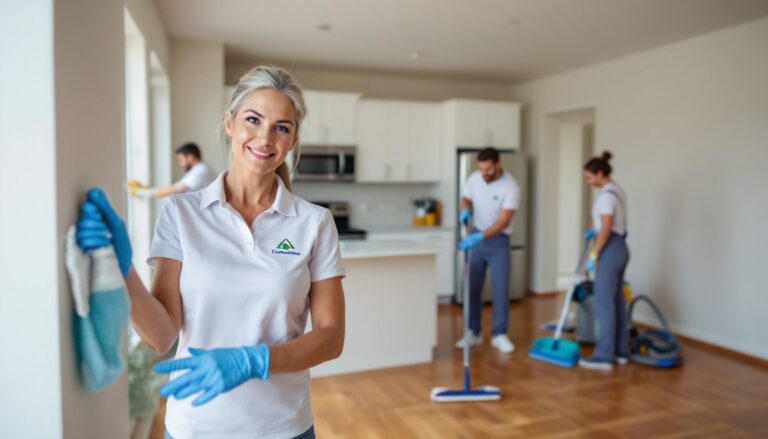
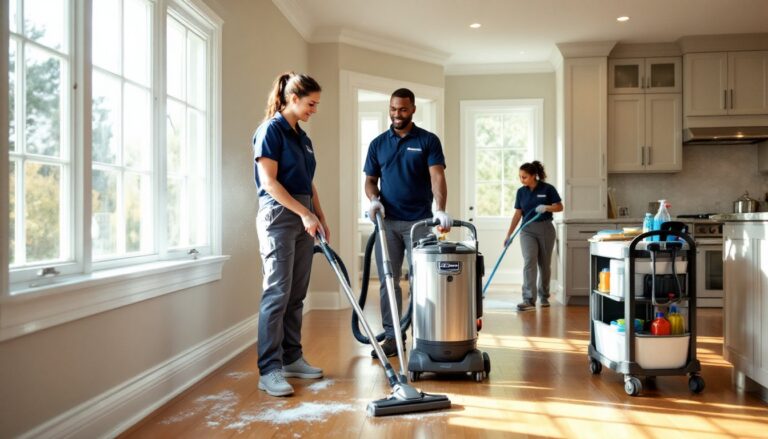
The appeal is time: a 4-person crew tackles a 3,000 sq ft home in 3–4 hours, whereas DIY deep cleaning might consume an entire Saturday. If you’re managing a busy household or juggling multiple commitments, that’s valuable breathing room.
What to Look For in a Local Cleaning Company
Before calling or booking online, verify a few things. Check that the company is bonded and insured, essential if something gets damaged or items go missing. Read recent reviews on Google, Nextdoor, or Yelp, specifically looking for comments about attention to detail, punctuality, and how the company handles customer complaints.
Ask whether they use their own supplies or yours, and whether they bring their own vacuums or expect you to provide one. If anyone in your household has chemical sensitivities, confirm they offer eco-friendly or fragrance-free options.
Confirm the scope clearly: What surfaces do they clean? Do they move furniture? Do baseboards and ceiling fans get dusted? Are windows included? Vague agreements lead to disappointment. Also ask about their background check policy for employees, this matters when strangers have keys to your home.
Get a quote based on an in-person walk-through if possible, not a phone estimate. Pricing varies wildly based on current clutter, carpet condition, and whether bathrooms have heavy buildup. Finally, start with a single booking before committing to a monthly contract.
Budget-Friendly DIY Cleaning Approaches for Your Home
DIY cleaning costs next to nothing if you already have basic supplies. A bottle of all-purpose cleaner, dish soap, baking soda, white vinegar, microfiber cloths, and a decent vacuum cover 90% of household cleaning needs. Total startup: under $30.
The trade-off is time and physical effort. A thorough weekly tidy (dishes, surfaces, floors, bathrooms) takes 2–3 hours for an average house. Monthly deep work, baseboards, ceiling fans, inside the microwave, behind furniture, can consume a full day.
For most homeowners, a hybrid approach works: handle the weekly light cleaning yourself, and hire professionals quarterly or twice yearly for deep work. That keeps costs under $1,000 per year while preventing the buildup that makes both DIY and professional cleaning harder.
If you’re committed to full DIY, systemize it. Assign specific tasks to specific days: Monday is bathrooms, Wednesday is kitchens, Friday is dusting and vacuuming. Breaking it into small sessions is more sustainable than one exhausting weekend blitz.
Room-by-Room Cleaning Hacks and Time-Saving Tips
Kitchens are the slowest room. Wipe stainless steel with a microfiber cloth and a few drops of olive oil (or a dedicated stainless steel spray) to avoid streaks. Don’t ignore appliance backs and top surfaces, dust accumulates there quickly. For hard water stains on faucets, soak a paper towel in white vinegar and let it sit for 15 minutes before wiping.
Bathrooms benefit from a preventive spray. Keep a bottle of diluted vinegar and water (1:1) in the shower. After showering, spray the tile and glass, then squeegee or wipe it dry. This stops soap scum and hard water stains from setting. Toilet bowl cleaner sits overnight, then one brush swish in the morning. Use a microfiber cloth for mirrors to eliminate streaks, paper towels leave lint.
Bedroom and living areas are simpler if you prevent clutter from piling up. Dust surfaces weekly, and vacuum or sweep twice weekly if you have pets or kids. Real Simple offers excellent home organization tips that prevent dust traps in the first place, fewer items on shelves means faster cleaning.
Hardwood and tile floors require different approaches. Hardwood floors attract water: use a dry microfiber dust mop first, then a barely-damp mop with pH-neutral floor cleaner. Tile can handle more moisture. A mixture of warm water and a few drops of dish soap works: avoid vinegar if you have grout sealer, as acid can damage it.
Laundry and entryways are often overlooked but matter in Woodland Hills. Dust settles on top of ceiling fans and high shelves fast. Use a step ladder and an old pillowcase: slide the case around each fan blade, and dust falls inside the case instead of on the floor. For entryways, place a quality entry mat outside and inside to trap dirt before it spreads.
Seasonal Cleaning Considerations for Woodland Hills Homes
Woodland Hills experiences mild winters but significant seasonal shifts in pollen and dust. Spring (March–May) brings heavy pollen from blooming landscaping: outdoor air vents and window sills clog quickly. Plan a thorough exterior cleaning, pressure wash the patio, wipe down window frames, and replace HVAC filters monthly during peak pollen season.
Summer brings dry heat and occasional wildfire smoke affecting air quality. Wipe down interior surfaces more frequently if smoke enters through poorly sealed doors. Fall (September–November) is peak time for debris from local trees and vegetation. Gutters need cleaning monthly if your property is near oaks or other heavy shedders.
Winter is the easiest season for indoor cleaning because humidity and pollen drop. It’s an ideal time for deep work like shampooing carpets or sealing grout, as drying happens faster and you won’t track in fresh dirt for a while.
The Spruce provides comprehensive guides on seasonal home maintenance that pairs well with cleaning schedules. Combining cleaning with maintenance, like gutter cleaning or HVAC filter replacement, saves effort because you’re already outside or thinking about airflow.
HVAC filters deserve mention: a clogged filter circulates dust through your home constantly. In Woodland Hills’ dusty climate, replace them every 30–60 days during high-pollen seasons, not just the standard 90 days. Good Housekeeping tests and reviews appliances including HVAC filters and purifiers if you want data-driven product choices for dust control.
Conclusion
Keeping a Woodland Hills home clean is manageable once you define what “clean” means for your household and budget. Most homeowners find that a combination of regular DIY upkeep and occasional professional help, whether quarterly or monthly, keeps dust at bay without overwhelming your schedule or wallet. Start with honest inventory: How much time do you realistically have? What’s your budget? Which rooms matter most? Then build a system and stick to it. Consistency beats heroic weekend cleaning every time.