
Table of Contents
ToggleHouse cleaning cards are simple, tangible task organizers that transform how homeowners manage their cleaning routines. Unlike digital apps that demand phone scrolling, these physical cards live on your fridge, kitchen counter, or dashboard, wherever you’ll actually see them. They work because they break big cleaning projects into bite-sized, actionable steps and provide visual satisfaction when you flip or check them off. Whether you’re tackling weekly deep cleans, delegating chores among family members, or building a sustainable cleaning habit, cleaning cards deliver clarity and momentum. In this guide, we’ll explore 10 practical approaches to design and use cleaning cards that fit your home’s unique layout, your schedule, and your organizational style.
Key Takeaways
- House cleaning cards work by transforming mental to-do lists into tangible, visible commitments that reduce decision fatigue and create accountability for all household members.
- Design task-based cleaning cards around frequency—daily (10-minute resets), weekly (room-specific deep cleans), and monthly (large jobs)—with estimated time to prevent overload and maintain motivation.
- Room-by-room cleaning cards eliminate context-switching and work best for delegating chores in families, ensuring each person owns specific spaces with no overlap or ambiguity.
- Laminate cards in 4×6-inch or 5×7-inch sizes and use color-coding by room or task frequency to increase visual organization and household adoption rates.
- Post cleaning cards in high-traffic areas like fridges or bathrooms rather than storing them in binders, and adjust the system based on actual household behavior rather than theoretical design.
- The psychology of physically checking off tasks provides dopamine-driven momentum; choose a tracking method (dry-erase markers or weekly reprints) that fits your household’s preferences and lifestyle.
What Are House Cleaning Cards and Why They Work
House cleaning cards are printed or handwritten task cards that outline specific cleaning jobs for each room or time period. Think of them as the physical equivalent of a checklist, but one you can hold, rearrange, and physically remove when a task is done.
Why do they work so well? First, they create a tangible commitment. When you write something down and see it printed or written on cardstock, your brain treats it differently than a mental note. Second, they eliminate decision fatigue. On a busy Tuesday, you don’t have to ask yourself, “What should I clean today?” The card tells you. Third, they’re portable. You can take a cleaning card from room to room, which keeps you focused and prevents the “I’ll just tidy this first” tangent that derails most people.
For families, cleaning cards are accountability tools. Kids can see their assigned tasks clearly, and parents have a reference point when someone says, “But you didn’t ask me to do that.” For solo homeowners, cards serve as a gentle nudge that replaces nagging yourself. According to home organization tips from Real Simple, the act of physically checking off tasks provides a dopamine hit, that small victory accumulates into genuine momentum.
Task-Based Cleaning Cards for Daily Routines
The most straightforward cleaning card system organizes tasks by frequency: daily, weekly, and monthly. Daily cards might include quick 10-minute resets: wiping kitchen counters, doing dishes, and tidying living room cushions. These aren’t deep cleans, they’re maintenance tasks that keep entropy at bay.
Weekly cards dig deeper. Monday might be “bathrooms”, scrubbing toilets, tubs, and mirrors. Wednesday could be “kitchen deep clean”, inside the microwave, behind appliances, and cabinet fronts. Friday might tackle floors. This rotation prevents burnout because no single day feels overwhelming.
Monthly and seasonal cards handle the big jobs: ceiling fans, baseboards, window washing, or HVAC filter changes. By isolating these tasks onto separate cards, they don’t feel like they’re dangling over your head constantly. You know they’ll get done in their designated month.
When designing task-based cards, include estimated time so you can batch work or avoid overloading a single day. Write “Bathrooms (45 min)” rather than just “Bathrooms.” This prevents the surprise of starting a 15-minute task that actually takes an hour.
Room-by-Room Cleaning Cards
Another effective approach assigns a card per room, with that room’s complete cleaning protocol listed. Your “Kitchen” card includes wiping counters, cleaning the stovetop, organizing the pantry shelf, and mopping. Your “Bedroom” card covers dusting, vacuuming, changing sheets, and putting clothes away.
The advantage here is focus. You walk into the kitchen with the kitchen card in hand and work through the list without jumping to other rooms. This reduces context-switching, which home appliance reviews often overlook in their efficiency recommendations, but any productivity expert will confirm saves time.
Room-by-room cards work especially well for large homes or if you’re delegating. Assign the “Master Bathroom” card to one person and the “Guest Bedroom” card to another. No ambiguity. No overlap. No one cleans the same room twice.
Design and Customization Ideas for Your Cleaning Cards
Your cleaning cards should be durable enough to handle moisture and repeated handling. Use cardstock or laminated paper, not regular printer paper, which gets soggy and tears. Aim for 4×6-inch or 5×7-inch size: large enough to read from across a room, small enough to carry.
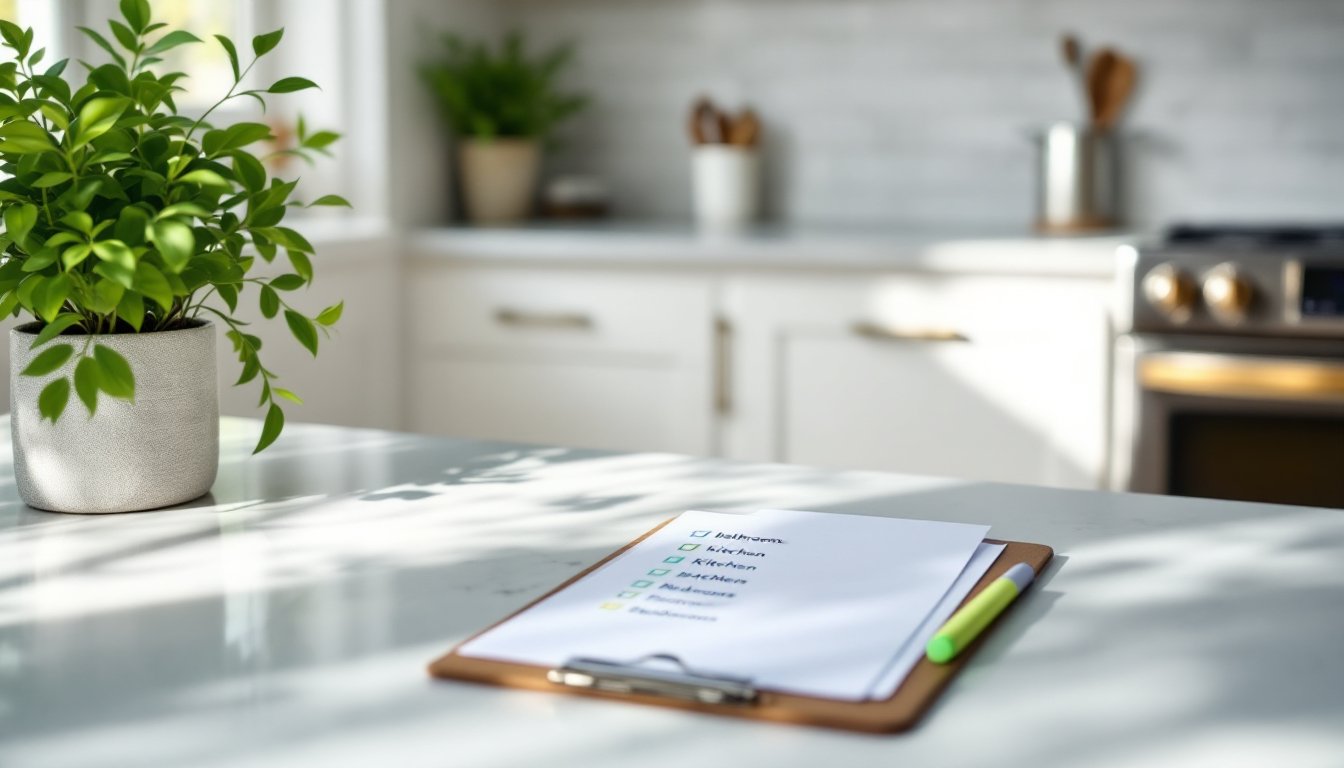
Include these core elements on every card: the room or task name (large, at the top), a bulleted list of specific tasks, an estimated time, and a checkbox or tracking method. Some people use dry-erase markers on laminated cards to check off daily. Others print a new set each week. Both work, choose based on your preference and household dynamics.
Consider adding product or tool recommendations if it helps. For example: “Bathrooms, Glass cleaner, toilet brush, microfiber cloths (20 min).” This prevents someone from starting a task and realizing halfway through they’re missing supplies.
Color-Coding and Visual Organization Systems
Color-coding transforms cards from functional to genuinely useful. Assign one color per room: blue cards for bathrooms, green for kitchen, yellow for bedrooms. Or use colors by frequency: red for daily, orange for weekly, blue for monthly. Your household will internalize the system within days.
You can also laminate cards and use sticky dots or labels to track which tasks are complete. Or design a physical card holder, a simple clipboard, a pegboard with hooks for hanging cards, or a small file box on the counter. The holder becomes your “home command center” where everyone checks their assignments.
For visual appeal without Pinterest excess, simple living strategies emphasize clean design: legible font, white space, and a consistent template. Avoid cluttering cards with decorative flourishes that distract from the task. The psychology here is straightforward, busy visuals increase cognitive load and reduce task completion.
Implementing Cleaning Cards Into Your Home System
Start small. Don’t redesign your entire cleaning routine at once. Pick one problem area, maybe the kitchen always spirals into chaos, or Saturday mornings are chaotic because no one knows what to clean. Design 2-3 cards for that area and test them for two weeks.
Notice what works and what doesn’t. If your “Quick Morning Reset” card consistently gets ignored because it has too many items, cut it to the three essentials. If “Monthly Deep Clean” card never gets done, break it into two bi-weekly cards. Adjust based on real behavior, not theory.
Post cards where they’ll be seen and used. Bathroom cleaning card in the bathroom (on a hook or bulletin board), kitchen card on the fridge, bedroom cards in each bedroom. Don’t create a master system in a binder that stays in a closet, it won’t get used.
For families, establish a rotation or assignment system. Does everyone clean everything on a schedule, or does each person own specific rooms? Post the system clearly. Consistency matters more than the system itself.
Track results informally. Some households use a simple tally on the card itself. Others move completed cards to a “done” pile and print new ones weekly. The goal isn’t obsessive tracking, it’s maintaining visibility and building the habit.
Conclusion
Cleaning cards are low-tech, effective, and adaptable to any home size or family structure. They work because they combine clarity, accountability, and the subtle psychology of visual progress. Start with one card, iterate based on what actually happens in your home, and build from there. The best system is the one your household will actually use, not the most elaborate or beautiful one.